 Mini-Module

Summary
The Threat Hunting with WAF module is designed for
- Cybersecurity professionals looking to deepen their threat hunting skills, - IT security analysts seeking to protect web applications, and
- Network administrators interested in proactive threat detection. Throughout this module, students will develop
- Utilize a WAF for effective threat hunting and incident response, - Identify and analyze potential threats and vulnerabilities using WAF data, - Apply advanced detection techniques to discover anomalies in network traffic, and
- Implement strategies to reduce the risk of cyber threats and enhance web security.
Recommended prior knowledge:
-
Basic understanding of cybersecurity concepts
-
Familiarity with web application architecture
-
Knowledge of networking fundamentals
Introduction
A Web Application Firewall (WAF) is a security layer used to protect web applications. Unlike traditional firewalls, WAFs specifically target threats aimed at web applications. These threats include SQL injections, XSS (Cross-Site Scripting) attacks, file upload attacks, and other web-based threats.
WAF-based threat hunting is a proactive security approach aimed at protecting web applications. This process is carried out using logs, alerts, and analyses provided by WAFs. Threat hunters examine WAF data to identify potential threats, analyze the source of these threats, and develop strategies to prevent similar attacks in the future.
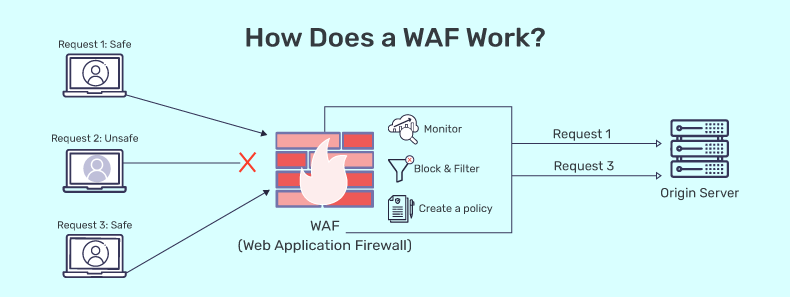
( Image Source : https://www.linkedin.com/pulse/what-waf-web-application-firewall-ronen-taieb/ )
This section has provided an introduction to the topic. The next section will cover the Role of WAF in Threat Hunting.