 Mini-Module

Summary
The Threat Hunting with EDR module is designed for
- SOC Analysts (Level 1, 2, or aspiring), - Incident Responders, - Threat Hunters, - Security Engineers, and
- IT professionals transitioning into cybersecurity. Throughout this module, students will develop
- Identify suspicious endpoint behavior using EDR tools, - Perform effective threat hunting using real-world techniques, - Analyze attacker tactics, techniques, and procedures (TTPs), - Investigate and respond to security incidents across endpoints, and
- Improve detection strategies based on behavioral patterns.
Recommended prior knowledge:
-
Basic understanding of cybersecurity concepts
-
Knowledge of common attack techniques (e.g., phishing, malware)
-
Willingness to learn hands-on with EDR platforms
Introduction
Threat hunting is a fundamental practice in modern cybersecurity strategies. It involves actively searching for potential security incidents and indicators of compromise (IOCs) that can evade traditional security measures. In this process, endpoint detection and response (EDR) tools play a critical role by providing security teams with the data and capabilities they need.
This module focuses on "Threat Hunting with EDR" and explores two key areas:
-
The core function of EDR in threat hunting
-
The importance of EDR data for threat hunting
Understanding the use of EDR tools in the threat hunting process, and the role of the data provided by these tools in threat detection and analysis, will allow us to develop the capabilities to respond more effectively and quickly to security events.
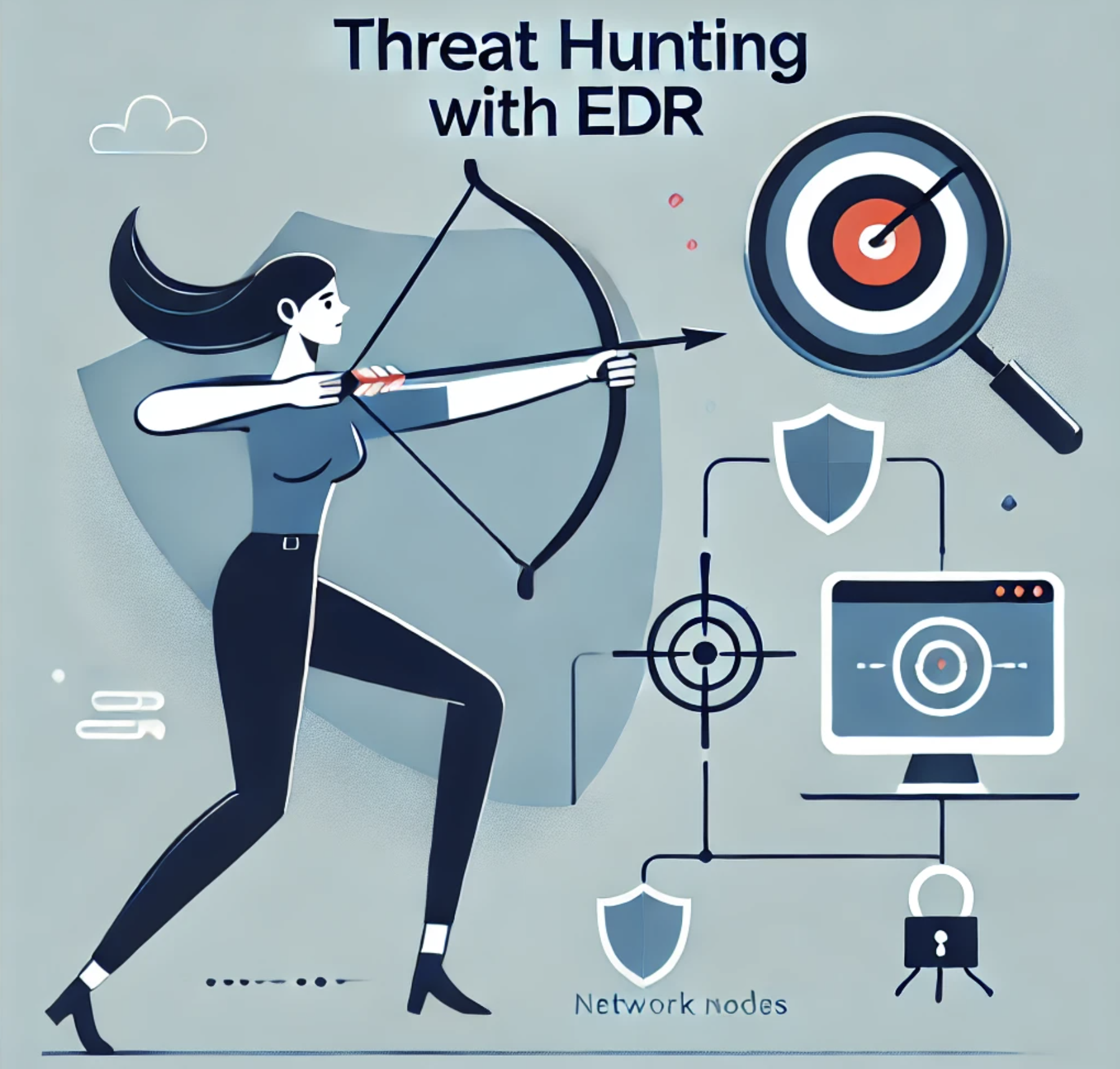
EDR tools can assist threat hunters in several ways. First, EDR tools provide rich and detailed data about your endpoints. You can use this data to create hypotheses, queries, and indicators of compromise (IOCs) for threat hunting. In addition, these tools allow you to instantly detect and analyze endpoint incidents, enabling you to respond quickly and effectively in the early stages of a cyber threat.
The data provided by EDR tools plays a critical role in every phase of the threat hunting process. During the data collection and enrichment phase, EDR tools collect information from multiple sources (logs, file activity, network connections, system events, and user behavior) and enrich this information with threat intelligence and contextual data. This enriched data makes it possible to detect threats in a more comprehensive and contextual manner.
This section has introduced the topic of Threat Hunting with EDR. The next section will cover Importance of EDR Data for Threat Hunting.