 Mini-Module

Summary
The Threat Hunting for Web Attacks module is designed for
- Cybersecurity professionals seeking to expand their threat hunting skills, - IT professionals interested in transitioning to a cybersecurity role, and
- Web developers aiming to understand and counteract web-based threats. Throughout this module, students will develop
- Gain a comprehensive understanding of web attack methodologies, - Develop the capability to recognize indicators of compromise within web environments, - Acquire practical skills for using industry-standard threat hunting tools, and
- Enhance decision-making abilities with a strategic mindset towards threat mitigation.
Recommended prior knowledge:
-
Basic understanding of web technologies
-
Familiarity with cybersecurity fundamentals
-
Prior experience with network monitoring tools (recommended)
Introduction
Web attacks are one of the most common and devastating security threats businesses face today. Components such as web applications, servers, and APIs have become critical targets for attackers. The "Threat Hunting for Web Attacks" module aims to outline the fundamental steps for developing an effective defense against such attacks, understanding the threat surface, and identifying vulnerabilities. This training focuses on how a Threat Hunter can proactively monitor and prevent security threats targeting web applications.
Understanding the Web Attack Surface
The first step in developing an effective defense against web attacks is understanding the web attack surface. Web applications, servers, and APIs are among the critical points attackers may target. Each of these components harbors potential security vulnerabilities. This section will focus on the scope of the web attack surface and how to analyze it.
Web Applications
Web applications are the most frequently targeted points due to user interactions and data processing. Common attack vectors such as SQL injection, cross-site scripting (XSS), and cross-site request forgery (CSRF) are often targeted.
Threat hunters use Dynamic Application Security Testing (DAST) tools to detect vulnerabilities in web applications. They perform log analysis to detect abnormal user behavior. They conduct regular security tests and code analyses to identify potential vulnerabilities and attack vectors.
Servers
Web servers are critical systems where applications are hosted and data is stored. Factors such as configuration errors, security vulnerabilities, weak password policies, and outdated software can make servers vulnerable.
The threat hunter periodically reviews server configurations and scans for security vulnerabilities. They test password policies to detect weak passwords and defend against malicious attempts. They implement regular update and audit processes for outdated software and unpatched systems.
APIs
Modern web applications use APIs (Application Programming Interfaces) to exchange data with other services. APIs are vulnerable to risks such as authentication weaknesses and data validation failures.
Threat hunters monitor API calls and responses and analyze logs for vulnerabilities and anomalous activity. They regularly review API gateways and security mechanisms to ensure API security. They test authentication and data validation processes on APIs and identify potential vulnerabilities.
Threat hunting actions specific to each web component help effectively monitor and manage potential web attack surface vulnerabilities.
OWASP Top 10
The OWASP Top 10 is a report that identifies the most common and critical web application security risks. The list, compiled by the Open Web Application Security Project (OWASP), outlines the top threats and vulnerabilities that developers and cybersecurity professionals should consider. The OWASP Top 10 is recognized worldwide as a guide to secure software development processes, reduce vulnerabilities, and make web applications more secure. It is regularly updated to include the most prevalent security risks.
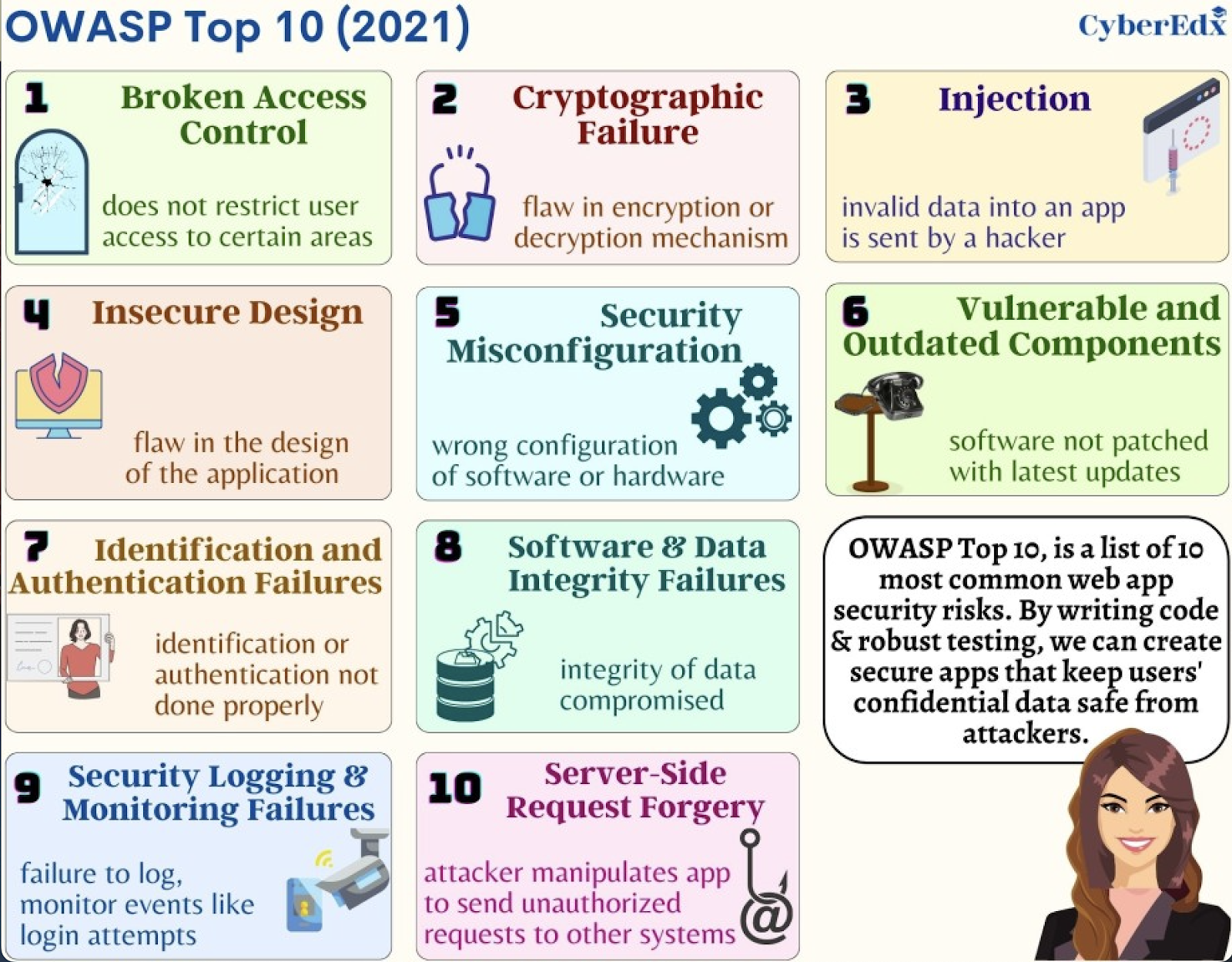
(Image Source: https://www.linkedin.com/pulse/what-should-project-leaders-know-owasp-top-10-niharika-srivastav)
This section has provided an introduction to the topic. The next section in the training will cover Common Web Attack Vectors.