 Mini-Module
Summary
The Introduction to Threat Hunting module is designed for
- Aspiring cybersecurity professionals, - IT professionals seeking to specialize in threat hunting, and
- Security analysts looking to update their threat detection skills. Throughout this module, students will develop
- Develop a foundational understanding of threat hunting practices and techniques, - Gain the ability to identify and analyze security threats effectively, and
- Enhance skills in proactive network and system protection.
Recommended prior knowledge:
-
Basic understanding of computer networks
-
Familiarity with cybersecurity fundamentals
Introduction
Threat hunting is the proactive process of searching for hidden threats within an organization's information systems and networks. The process is designed to identify complex and sophisticated attacks that cannot be detected by existing security measures. Threat hunting typically involves cybersecurity professionals performing activities such as data collection, analysis, and threat identification.
Cybersecurity is the set of technologies, processes, and controls implemented to protect an organization's information assets. Threat hunting is a critical component of this framework as it helps uncover threats that may not be detected by traditional security measures. Threat hunting proactively improves an organization's security posture and ensures preparedness against potential attacks.

Why Are Reactive Security Measures Not Enough?
Traditional security measures often take a reactive approach, taking action after an attack has occurred. These measures rely on technologies such as antivirus software, firewalls, and intrusion detection systems (IDS). However, in an environment where new and advanced threats are rapidly evolving, these approaches can become inadequate. Reactive security measures are only effective against known threats and are vulnerable to unknown, zero-day vulnerabilities.
The Importance of Proactive Security Approaches
Proactive security approaches involve continuous processes such as monitoring, analysis, and threat hunting to detect and prevent potential threats. These approaches enable organizations to identify and respond to threats in their early stages. Proactive security means identifying potential threats in advance and taking necessary action before attacks occur, allowing organizations to respond more quickly and effectively to security incidents.
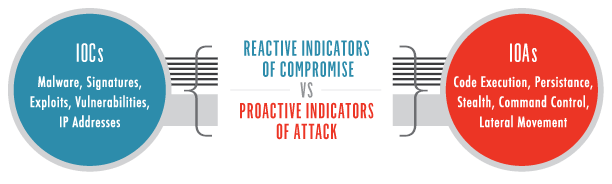
( Image Source : https://www.crowdstrike.com/cybersecurity-101/indicators-of-compromise/ioa-vs-ioc/ )
The Threat Landscape and the Role of Threat Hunting
Today’s Threat Landscape
Today's cyber threat landscape is highly dynamic and complex. Cybercriminals are constantly developing new techniques and tools to circumvent security measures. Advanced Persistent Threats (APTs), ransomware, spyware, and many other types of threats pose significant risks to organizations. In addition, cyber-attacks can target not only large enterprises, but also small and medium-sized businesses.
Benefits of Threat Hunting Against Threats
Threat hunting provides an effective defense against these complex and advanced threats. Threat hunters continuously scan systems and networks for anomalous behavior and potential threats. So that they can prevent attackers from infiltrating systems and causing damage. Threat hunting also helps organizations respond more quickly to security incidents and minimize damage. Additionally, threat hunting processes enable organizations to continuously improve their security posture and become more resilient to future attacks.
This section introduced the concept of threat hunting. The next section will cover Threat Hunting Team and Competencies .”